
This afternoon, my phone rang. I was working on something, distracted, so when the person on the other end started talking, I genuinely couldn’t make out what they were saying.
“Huh?” I said. “Sorry, can you repeat that?”
I expected her to slow down. Maybe ask me to move somewhere quieter. Instead, she just… kept talking.
Same pace. Same intensity. Like I hadn’t said a word.
“Hold on,” I tried again. “I genuinely can’t hear you. Can you slow down?”
Nothing. Just another sentence. Then another. And another.
That’s when I knew. This wasn’t a person. Not really. This was something that had been programmed to deliver a message, regardless of whether anyone on the other end was actually receiving it. It was a bot trying to sound human. And honestly, it was pretty good at it. The voice had warmth. The cadence felt natural. If you weren’t paying close attention, you’d think you were talking to a real person who actually gave a damn about helping you.
But you try to respond? Try to tell it your situation is different? Try to ask a follow-up question that breaks its script?
It doesn’t adjust. It doesn’t adapt. It just keeps going.
I hung up after about 30 seconds. I had about 30 more seconds worth of whatever it was trying to tell me.
The Moment That Changed Everything
But here’s what got me. On the drive back to the office, I couldn’t stop thinking about it.
Not because the call was annoying. Plenty of spam calls are annoying.
It was because I suddenly realized I do this in my own business all the time.
My client sends me an email explaining their specific situation. They’ve taken time to write out the details. They’re hoping I’ll read it carefully and understand what they actually need.
What do I do?
I send them my standard proposal. The same one I send everyone. Word for word. No adjustment for their actual situation.
Or worse. Someone on my team does. And they’re just following the process. The script.
That client is trying to tell me something. They’re trying to have a conversation. But I’m just… playing my message.
I’m the bot.
Why This Matters More Than You Think
Here’s what I started noticing after that call:
Every successful business I know operates in one of two ways.
Mode 1: Talking. Executing scripts. Following processes. Being efficient. Handling volume. Getting things done on schedule.
Mode 2: Listening. Adapting. Solving specific problems. Noticing when something doesn’t fit. Having the guts to break the process when the situation calls for it.
Here’s the thing: every business needs both modes. But most businesses have gotten the ratio backwards.
They’re 80% talking, 20% listening.
And it’s costing them more than they realize.

The Three Things That Happen When You Stop Listening
1. You Start Losing Your Best Customers to People Who Actually Listen
I had a client who needed a specific electrical installation done. Unusual request. Not something the electrician typically handled.
The electrician’s response? “That’s not a standard installation. You’d need to hire someone who specializes in that.”
The client felt brushed off. So they called another electrician. This one actually listened. Asked questions. Realized it wasn’t actually that unusual. Got the job done in two days.
The first electrician lost that client. Not because their work was worse. Not because they were more expensive. But because they heard “unusual request” and defaulted to “not our thing” instead of “let me think about this.”
That’s how you lose good clients to smaller competitors who still actually listen.
2. Your Team Stops Thinking and Starts Just Executing
I know a plumbing company with 15 people. Good team. Good work. But their owner is obsessed with systems. Every step is documented. Every decision is predetermined.
Their best technician quit last month. When I asked him why, he said something that stuck with me: “I’m not using my brain anymore. I’m just following a checklist. Any apprentice could do this job. I’m a plumber, not a robot.”
You know what that owner lost? Not just an employee. He lost the person who could handle the weird jobs. The complex diagnoses. The situations where the standard process doesn’t work. The person who actually made his business better than his competitors.
He replaced a plumber with a checklist.
3. You Become Just Another Service Provider. Replaceable. Competing on Price.
There’s a property management company in Auckland that’s been killing it for five years. Not because they’re the biggest. Not because they’re the cheapest. Because every landlord feels like they actually care about their specific property.
They follow up when something’s wrong. They actually read the emails tenants send. They notice patterns. They adjust their approach based on what works for that specific portfolio.
Everyone else? They’re just managing properties. Running the standard process. Two check-ins a year, standard maintenance schedule, templated emails.
When those landlords get a quote from someone cheaper, do they leave? Most don’t. Because they feel listened to.
The moment you become replaceable, price is the only thing left to compete on. And there’s always someone cheaper.
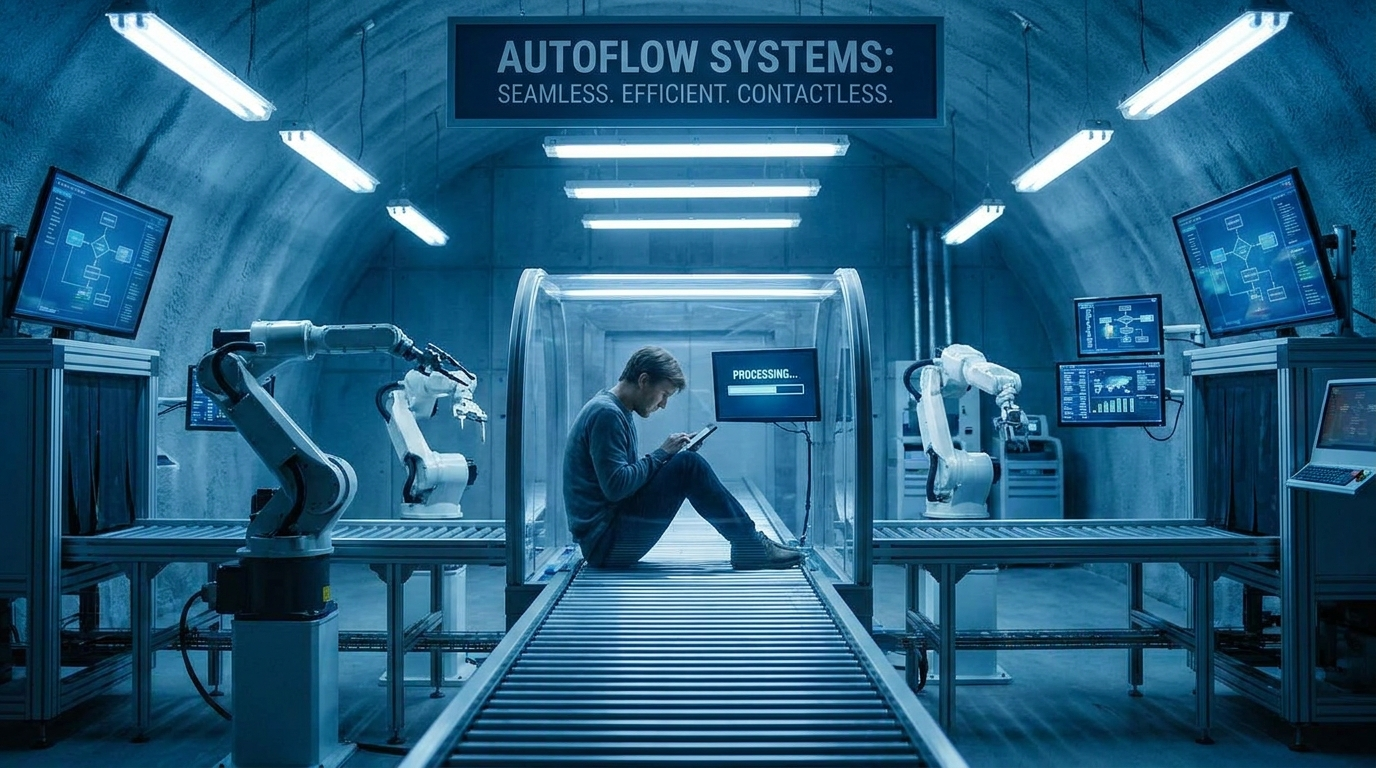
The Real Cost of Being a Bot
Let me give you the reality of what running a “script only” business actually looks like financially.
A client calls needing something done urgently. Your standard response is “we have a two-week turnaround.”
You lose the job to someone who said “let me see if we can make that work.”
A team member comes to you with an idea for how to improve the process. Your response is “that’s not how we do it here.”
You lose the improvement. You lose the momentum. You lose the moment where your team felt engaged.
A customer reaches out with a problem that doesn’t fit your standard service offering. Your response is a templated email about why you can’t help with that.
You lose the opportunity to actually solve their problem. You lose the chance to stand out. You lose potential referrals from a client who could have been loyal.
Add those up over a year, and you’re losing more than money. You’re losing the edge that made you different from every other business in your space.
Here’s What The Winning Businesses Actually Do
I’ve been watching the businesses that actually win in their markets. The ones that aren’t competing on price. The ones that have loyal clients and teams that actually want to show up.
Here’s the pattern I see:
They automate the right things. Scheduling. Invoicing. Initial data collection. Follow-ups. The repetitive stuff. The stuff that doesn’t require judgment.
But they never automate the listening. When a client reaches out with something unusual, a real person reads it. When a team member has an idea, someone actually listens instead of just pointing to the SOP manual.
They’ve figured out that you can be incredibly efficient about the processes, and still be human about the relationships.
A builder I know has a standard contract. But when a client sends back a contract with notes about what they need adjusted, he actually reads those notes. Doesn’t just counter-offer the standard terms. Sits down and thinks about whether those adjustments make sense.
A plumbing company schedules their work with an automated system. Super efficient. But when a customer calls saying they need it done urgently because their water heater failed and they have a newborn at home, someone picks up the phone. And they actually figure out how to fit them in. Not because it’s the SOP. But because they listened and understood the situation was different.
A landscaper has a standard maintenance schedule. But when a client mentions their teenager is having an outdoor party this weekend and they really need the garden looking perfect, the landscaper adjusts. Doesn’t just say “your maintenance day is the 15th.”
These are small things. But they’re the difference between being a service and being a trusted partner.
The Conversation Worth Having With Yourself
Here’s what I want you to do. Not someday. This week.
Look at your last 10 customer interactions. Not your systems. Your actual interactions.
How many of them involved you actually listening to something the customer said that was different from the standard situation?
And what did you do? Did you adapt? Or did you stick to the script?
Now look at your last 10 team interactions. Someone came to you with a question, a problem, or an idea that didn’t fit the process.
How many times did you actually listen and think about it? How many times did you just point them back to the manual?
This isn’t about having no systems. You need systems. They’re how you scale without burning out.
This is about knowing when to stick to the system and when to break it.
Because that’s where all the real wins happen. That’s where you beat the bigger companies with the slicker marketing. That’s where you keep your best people. That’s where you stop being replaceable.
The Line You Can’t Cross
Here’s the danger zone: the moment you automate the listening is the moment you stop being a business and start being a bot.
You can have perfect processes. But if they don’t include a real person somewhere who actually reads what the customer said and thinks about whether the standard answer applies, you’ve crossed into bot territory.
Your customer sends you an email with their specific situation. Do they get a templated response? Or does a person actually read it?
Your team member brings you a problem that doesn’t fit the playbook. Do they get sent back to page 47 of the manual? Or do you actually talk about it?
Someone calls needing something just slightly different from what you usually do. Does your system automatically say no? Or does someone actually consider it?
If the answer to any of these is “the system decides,” you’re a bot. And bots get beaten by people who still actually listen.
What I Realized On That Drive Back
That bot on the phone call? It wasn’t trying to be annoying. It was just doing what it was programmed to do. Deliver the message, regardless of whether anyone was listening.
And I realized: I’ve built systems in my own business that do exactly the same thing.
Not because I don’t care. I do. But because at some point, efficiency starts to feel smarter than thinking. Process starts to feel safer than judgment.
So I made a choice. Not to tear down my systems. But to make sure there’s a real person somewhere in the loop. Someone who reads what you actually said. Someone who thinks about whether this situation is different. Someone who has the authority to break the process if it makes sense.
That person is what makes you a real business instead of an automated service.
That person is why customers stay. Why teams are engaged. Why you’re not just competing on price.
That person is the difference between being listened to and being talked at.
The Only Question That Actually Matters
You’ve probably had this experience. You call a company with a problem. They give you their script. You say “but my situation is different.” And they give you the script again, just phrased differently.
How does that feel?
Like you’re not being heard. Like you don’t matter. Like you’re just a ticket to be processed.
Now ask yourself: are any of your customers feeling that way right now?
Because if they are, they’re probably looking for someone else right now.
Leave a comment
Your email won't be published