
I Waited 30 Minutes on Hold Just to Book an Appointment
14 November 2026 · 4 min read · Darryl Tong
A while ago I rang up to book an appointment. It wasn’t complicated. I knew what I needed and roughly when I was free. I was put in a queue for the next available officer, and I stayed in it for about thirty minutes.
Once someone picked up, the booking took under two minutes. The person was polite and good at their job. They’d also been making the same two-minute booking all day, one caller after another, while the queue behind me kept growing.
I thought about that half hour for a while afterwards. I could’ve done plenty with it, and so could everyone else who was waiting.
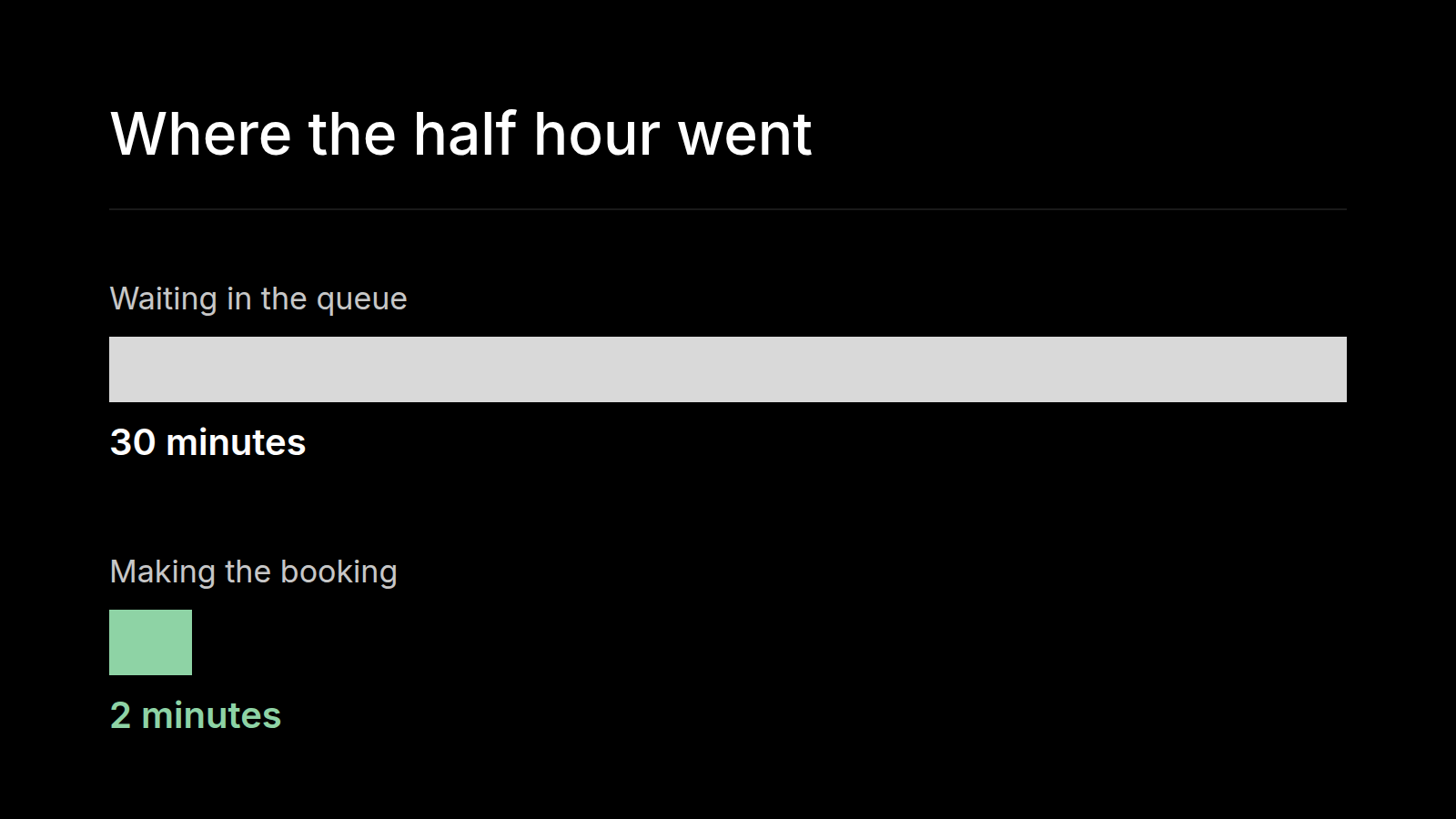
A simple task shouldn’t need a queue
Booking an appointment takes a few details: who you are, what you need and when you’re free. Most of the time there’s no judgement call involved. Yet plenty of businesses still run every booking through one phone line and whoever happens to be free to answer it. When that person is busy, callers wait. Some hang up and ring someone else, and the business never finds out they called.
What AI can do with a booking in 2026
The tools have come a long way from phone menus that ask you to press 1. An AI assistant can now answer a call or a message straight away, at any hour, hold a normal conversation, check the calendar and confirm a time.
It can also filter. It asks a few questions first, so urgent cases go to a person quickly, routine ones get booked on the spot, and enquiries that aren’t a fit get pointed somewhere more useful.
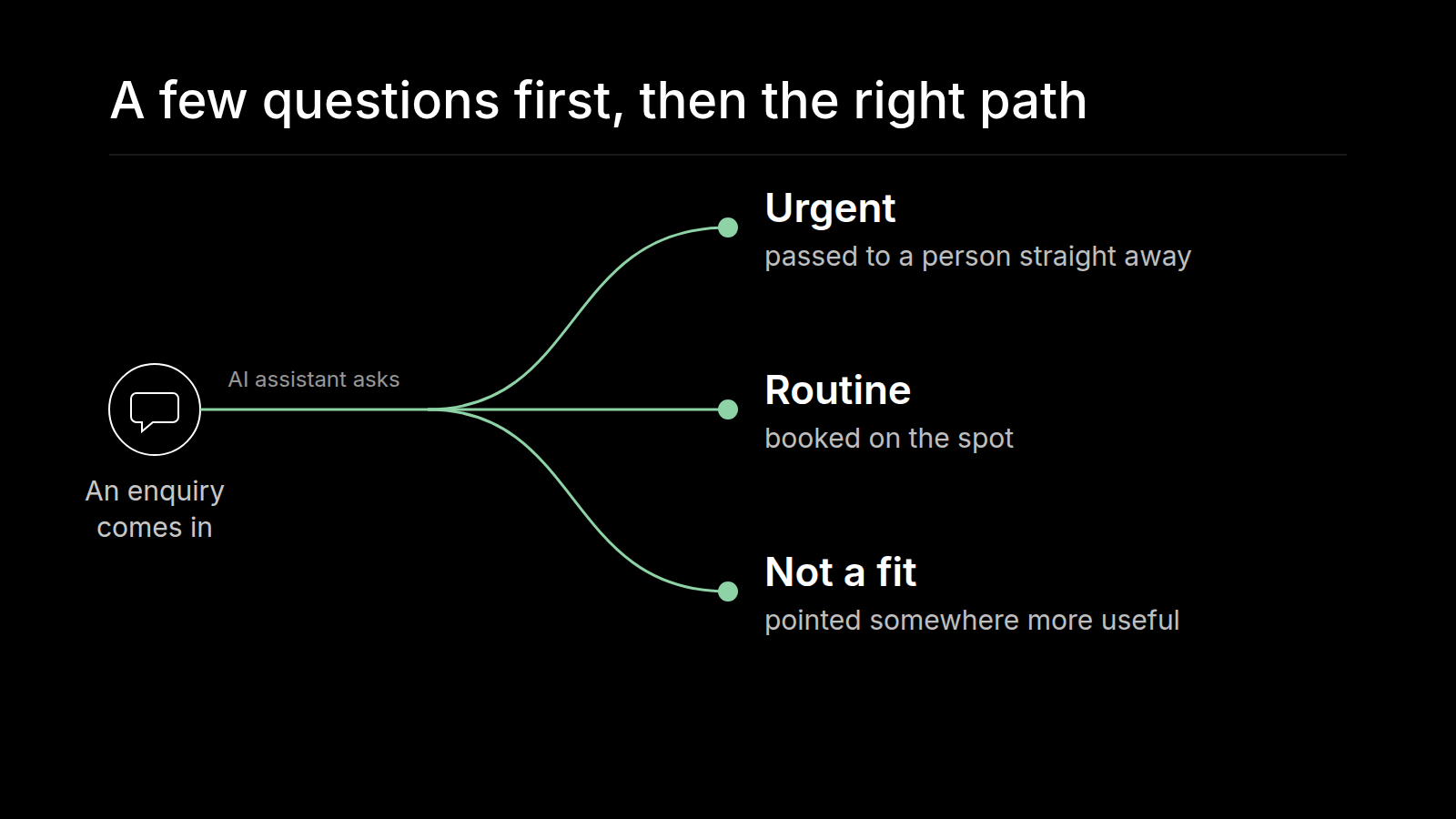
For the caller, a thirty-minute wait becomes a couple of minutes. For staff, the phone stops pulling them away from work that needs their full attention.
Not every business will benefit
I build these systems for a living, so I’d rather say this plainly. Not every company gets much out of AI automation. If you take a handful of calls a day and answer all of them, an AI assistant won’t change a lot for you. If your customers ring because they want to talk a problem through with you personally, putting software in front of that conversation would make things worse.
It pays off where speed of response decides whether you win the customer. That covers clinics, trades, property managers and any business where enquiries arrive while the team is busy with the people already in front of them. I once called five clinics and nobody picked up, and every one of those was a booking that went somewhere else. If your callers are waiting or giving up, a fast answer is worth real money. If you’re not sure which side you’re on, this guide will help you work it out.
AI shouldn’t replace people
This is what Octawerks has always believed. The officer who booked me in wasn’t the problem. Their day was full of a task that software could handle, which left them less time for the callers who needed a person.
We build automation to take the routine work, so people are free for the work that needs care and judgement, like a worried patient or a job that’s gone wrong. AI should never replace the human in that conversation.
The same goes for owners. The hours you spend on routine admin usually come out of your evenings and weekends. We think that time belongs to your family and to the things that make you happy.

A partner who’ll tell you when it won’t help
When we talk to a business, we start by listening to how it runs today. If automation will pay off, we’ll show you where, and what it’s likely to return. If it won’t, we’ll say so.
If your customers are sitting in a queue like the one I sat in, get in touch and we’ll look at it with you.