I didn't build this company from a whiteboard. I built it from burnout.
Fourteen years in industry. Three continents. Every role from boots on the ground to the boardroom. I watched the same broken cycle play out everywhere I went. And eventually, I lived it myself. This is the company that came out the other side of that.
Time is the one thing you cannot buy back. We build the systems that stop small businesses from losing it to work that should never have been anyone’s job.
"The people we serve are not slow. They are not resistant to change. They are buried. Buried in tasks that should never have landed on a human desk. That is the whole problem. And it is the only problem we came here to fix."
Darryl Tong, Founder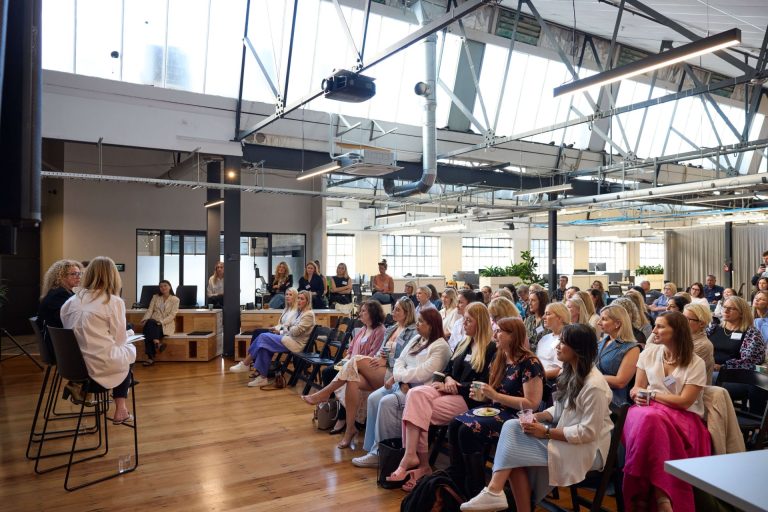
Started at 22. Learned the hard way.
In 2012, I stepped onto a plane as a 22-year-old commissioning engineer headed to the Middle East. Not the kind of trip people plan for a holiday. Harsh heat, remote job sites, weeks away from home in countries most people would not choose to go to. But I was hungry, and the work taught me things no classroom ever could.
Over the next decade I worked my way up through the ELV and security systems industry. Different companies, different countries, eventually landing as Business Development Manager at a well-regarded MNC. I sat in boardrooms and on factory floors. I managed teams. I chased targets. I hired people, lost people, and rehired for the same seat more times than I care to count.
And everywhere I went, the pattern was the same.
Talented people grinding through hours of admin they never signed up for. Managers firefighting every week instead of leading. Good staff quietly burning out, handing in their notice, walking out the door. Then the company would hire again. Train again. Watch them leave again. I saw this loop play out in every sector, every country, every size of business. Nobody higher up seemed to see it clearly enough to stop it.
The problem was never the people. It was always the system. Routine work designed for a spreadsheet being done by a human. Talented, skilled, capable people spending half their day on tasks that had no business being on anyone's desk in the first place.
I watched it happen to others for years. Then I started my own company.
I thought I knew the problems. I had lived them from both sides of the table. I knew what good operations looked like. I had the network. I had the experience. I was not prepared for how hard it actually is to run a business from scratch when there is nobody else to hand things off to.
Suddenly I was the one doing admin at midnight. The one training staff who left three months in. The one chasing leads manually, handling invoices, managing scheduling, wearing every hat at the same time. And no matter how long I worked, the pile never got smaller.
I was working twice as hard as I had ever worked in a job. The freedom I had imagined did not exist. The burnout I had watched destroy good people in every office I had ever worked in? I was living it myself, alone in my own business.
That was the moment Octawerks became real.
Not as a business plan. As a conviction. Business owners should not have to grind this hard. Teams should not be burning out on work that a well-built system could handle in minutes. Humans are wired for thinking, deciding, building relationships, solving complex problems. Not for filling in the same form two hundred times a week. Not for copying data between systems that should talk to each other. Not for chasing invoices by hand when a workflow could do it while the owner sleeps.
I built Octawerks because I understand both sides of this problem from the inside. The department head trying to hold a team together. The founder trying to hold everything together. That is not a background you can manufacture. And it is the reason every single project we take on starts with a real conversation, not a sales pitch.
I know what it feels like to be you. And I built this to help.
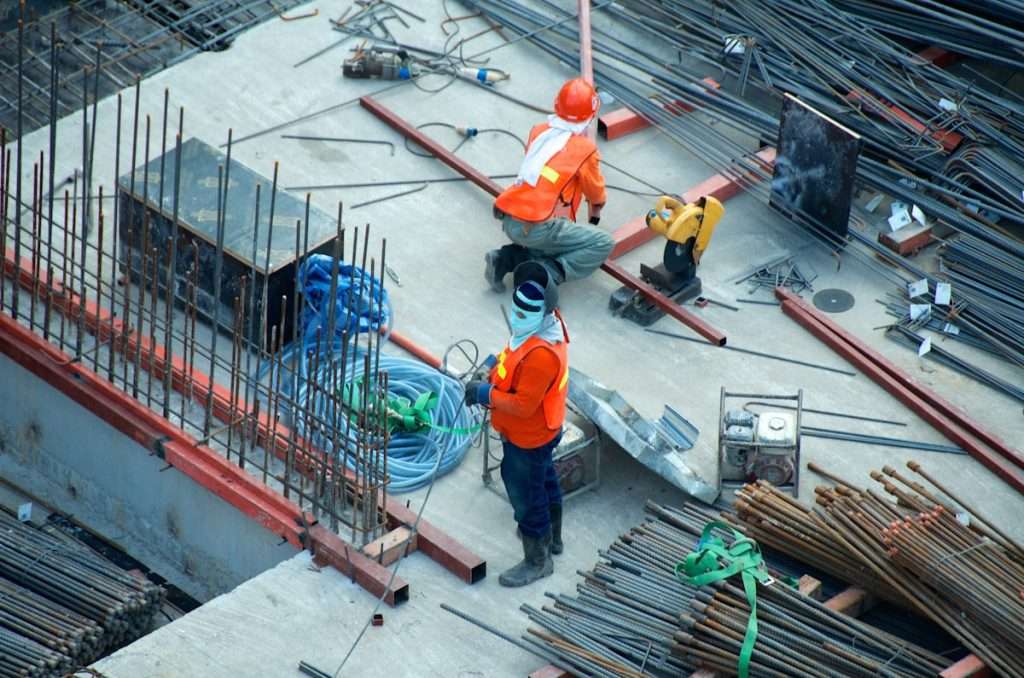
The people we work with are among the most skilled in their trade. They should be spending their time doing that trade. Not chasing paperwork.
The people steering every build we take on.
These days I do not build alone. Hameed, a graduate of Nanyang Technological University (NTU) in Singapore, is my solutions architect and co-pilot on every project we take on. He is the one who takes what comes out of a client conversation and turns it into the actual system: mapping the workflow, choosing the stack, and making sure it still holds up long after we have moved on to the next build.
We hire for values first. Skills second.
When it came time to build the Octawerks team, I made a decision early on: I was not going to hire for certifications. I was not going to stack up CVs and pick the best-looking credentials on the page. Anyone can learn a platform. Not everyone can genuinely care about the person sitting across from them.
So instead of a standard interview, I had long conversations. I asked one question above everything else: do you actually understand what it feels like to be a small business owner who is buried? Because if you do not understand that pain, you cannot build something that genuinely helps.
The people who joined Octawerks came from places that had the same dysfunction I spent a decade watching. They understood what it means to have a skilled role buried under admin. They had seen talented colleagues walk out the door because the system made the work unbearable. They were not just looking for another job. They were looking for somewhere that was actually trying to fix something real.
That alignment matters more than any qualification on paper. Skills can be taught. A shared sense of purpose cannot be manufactured.
What we look for in the people who join us
Genuine curiosity about how things work
Not just following instructions. Actually wanting to understand why a process works the way it does, and whether there is a smarter way to design it. That instinct is what separates someone who builds automations from someone who builds automations that actually hold up in the real world.
Empathy for the business owner under pressure
Our clients are not sitting on big budgets with unlimited time. They are running lean, doing five jobs at once, and trusting us with something important. Every person on our team has to feel that weight and take it seriously. If they cannot, they are not the right fit.
Comfort with change and a drive to stay sharp
The tools we use are evolving fast. A platform we recommended two years ago may not be the right call today. We need people who track changes, update their thinking, and are not afraid to say there is a better way now. That takes intellectual honesty and a willingness to keep learning, not just keep busy.
The same goal: give small businesses their time back
Not revenue targets. Not utilisation rates. The actual goal: when we finish a project, does the business owner have more breathing room than they had before? Does the team have less grinding work on their plate? That is the measure we care about. Everyone who joins Octawerks signs up to that standard, or they do not join at all.
Why our team has no fear of what AI is becoming.
A lot of people in the workforce right now are anxious about what AI is going to take over. That anxiety is real. I do not dismiss it. But the team at Octawerks sits in a very different place on that spectrum, and it is not because they are naive about where things are heading.
It is because they live inside these tools every single day.
They know exactly what AI can do, and what it cannot. They know where a well-configured workflow saves five hours a week. They also know where a poorly-thought-out automation creates three new problems downstream. They are not watching AI from the outside, wondering what it means for their career. They are the people inside it: making the decisions, asking the right questions, building the systems that actually work in practice.
The risk in this industry is not the people who understand AI. It is the people who do not and are too afraid to learn. Our team chose the other path, a long time ago.
They are not worried about being replaced because they are constantly moving toward the part of the work that cannot be automated: judgement, context, relationship, and genuine problem-solving for businesses with real stakes on the line. They know how to make themselves more valuable as the tools get smarter, not less. And that is a skill that compounds over time.
When I hire, this mindset is not optional. If someone sees AI as a threat rather than a tool they can master, they are not in the right seat. Our clients come to us because they want to use technology to get ahead, not just survive it. The team has to carry that same orientation, or the advice we give loses its conviction before it even lands.
We are not here to replace your staff with AI. We are here to give your staff the kind of work that actually deserves their skills. And we do that by staying ahead of what the tools can do, together, as a team that refuses to stop learning.
Four ideas that shape every project we take.
Hiring is not always the answer.
Most of the time you do not need more people. You need the people you have to stop doing things a system could handle. Headcount is the most expensive way to fix an automation problem.
SMEs do not need enterprise software.
Tools built for 500-person companies are wrong for you. Wrong complexity, wrong price, wrong assumptions. We build for SMEs first: simpler, cheaper, and faster to deploy.
Time is the real return.
Two hours saved per day is ten hours a week. Ten hours a week is a full day. That day belongs to strategy, customers, family, or rest. That is the real ROI of automation. Not the cost saving on paper.
Knowledge over selling.
We share what we learn. If our writing helps you fix something yourself without hiring us, that is a win for both sides. Trust comes from being useful first. Sales come second.
A few things we do differently.
The automation industry has its share of vendor-driven advice. We try to keep ours honest, because the people we serve cannot afford the wrong call.
We are not a software reseller.
We have no commission targets pushing us toward a specific platform. If Make solves your problem, we use Make. If a custom build is cheaper long term, we build it. Tools serve the outcome, not the other way around.
We listen before we propose.
The first conversation is about your situation, not our services. If we cannot help, we will say so and tell you who can. We would rather lose a project than oversell into a bad fit.
We deliver in weeks, not quarters.
Most projects go live in two to six weeks. We do not believe in six-month rollouts for SMEs. Speed matters because every week of waiting is another week of manual work.
We stay on after launch.
Automations break when something upstream changes. A platform updates its API, a form field gets renamed, a vendor switches systems. We monitor, we maintain, we improve. The handoff is not the finish line.
Singapore. New Zealand. Bangkok.
We work today across Singapore and New Zealand, with Thailand launching next. The SME problem looks the same in every market. The accents change. The pressure of running a small business does not.
Our home market. We work with SMEs across professional services, trades, retail, F&B, and logistics. Most of our active projects are here.
New Zealand SMEs face the same problems as Singapore ones, with one difference. More emphasis on lean operations, less reliance on grants. Honest market.
Our next market to launch. Part of our build team already works from here, keeping our cost base honest and delivery fast. Singapore-led, Bangkok-built, New Zealand-served, Thailand next.
New business, honest about it. Here is what you get instead of a wall of logos.
The audit measures your actual quote turnaround and your actual days-to-payment. If the numbers are fine, we tell you and you keep the report.
First automation running against real jobs inside two weeks, or you do not pay for the build.
Xero, your existing CRM, your job management software. Nothing to rip out, no new licence, no lock-in.
Tell us what is wasting your day.
A 30 minute conversation is usually enough to spot where the biggest time savings are hiding. No pitch, no slide deck, no follow-up sequence.
Start with the audit →